Tools of the Trade
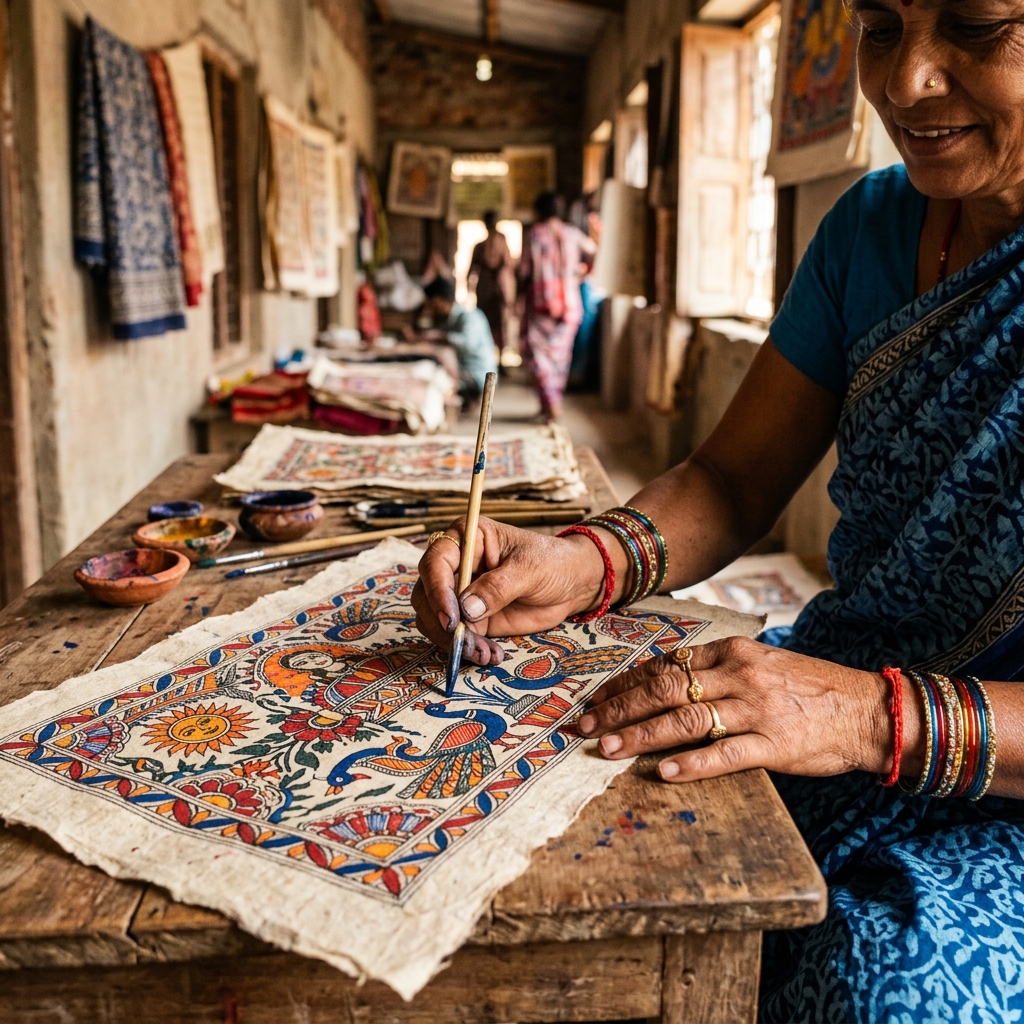
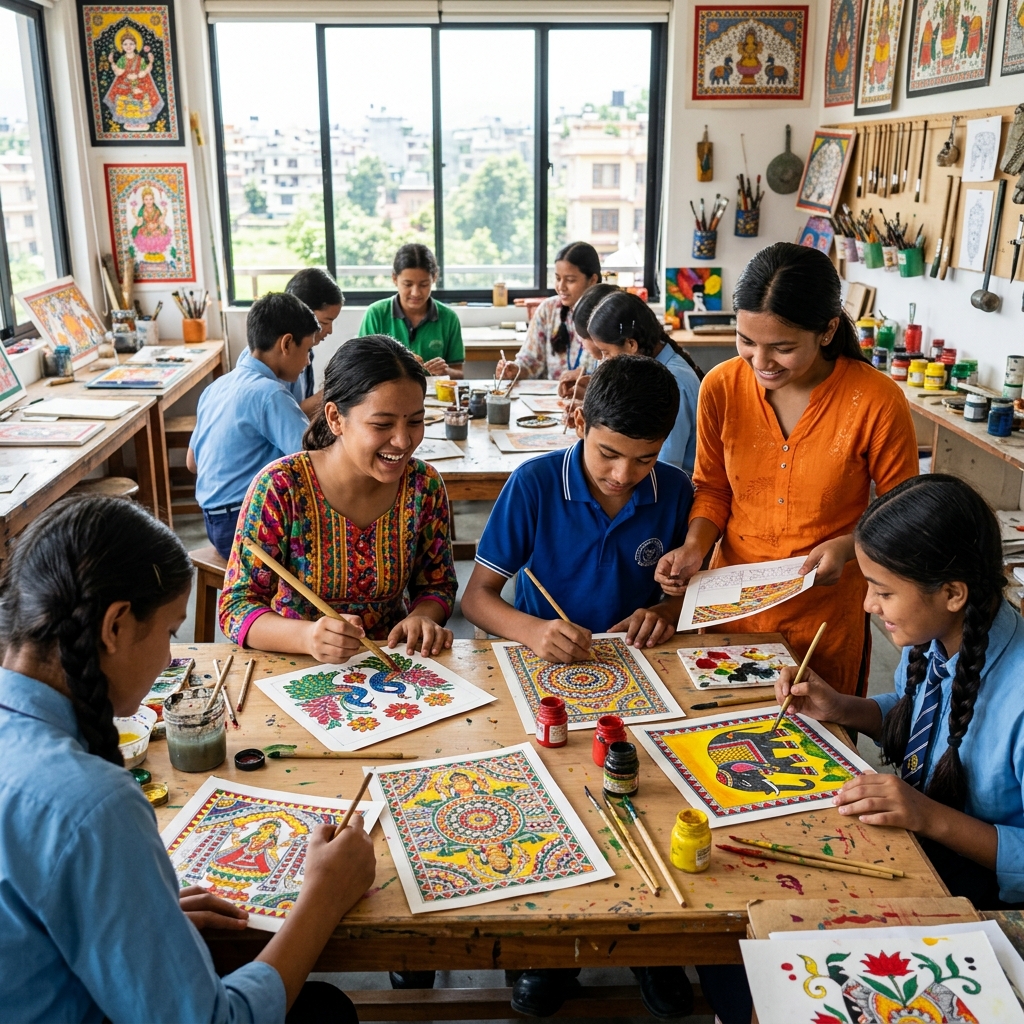
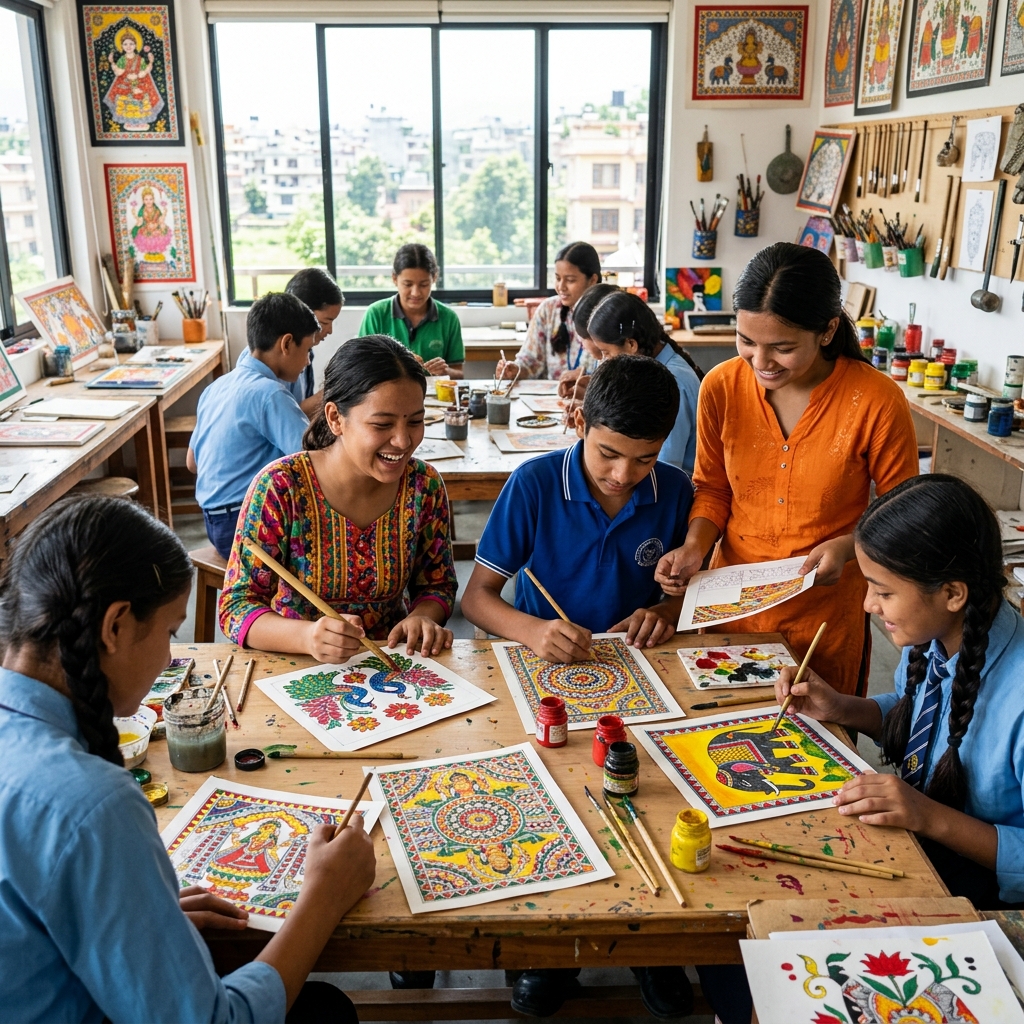
Before a single line is drawn, the artist must prepare their instruments. Mithila art relies on simple, organic tools that have remained unchanged for generations.
Bamboo Nibs (Kalam)
Hand-carved bamboo sticks used for the precision linework that defines the Mithila style.
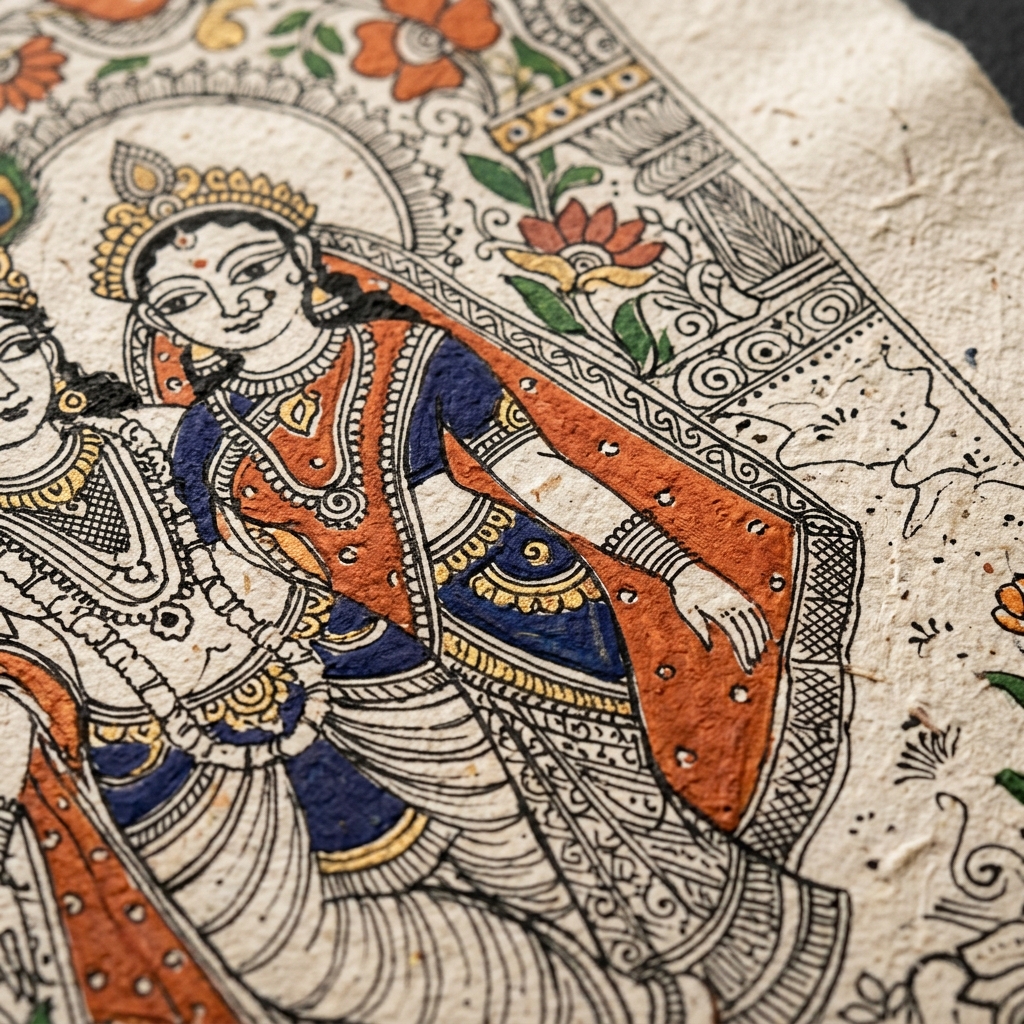
Handmade Paper
Traditionally treated with a wash of cow dung and clay to create a smooth, archival-quality surface.
Twig Brushes
Softened twigs and cotton-wrapped sticks used for filling larger areas with vibrant pigments.
A Palette Derived from the Earth
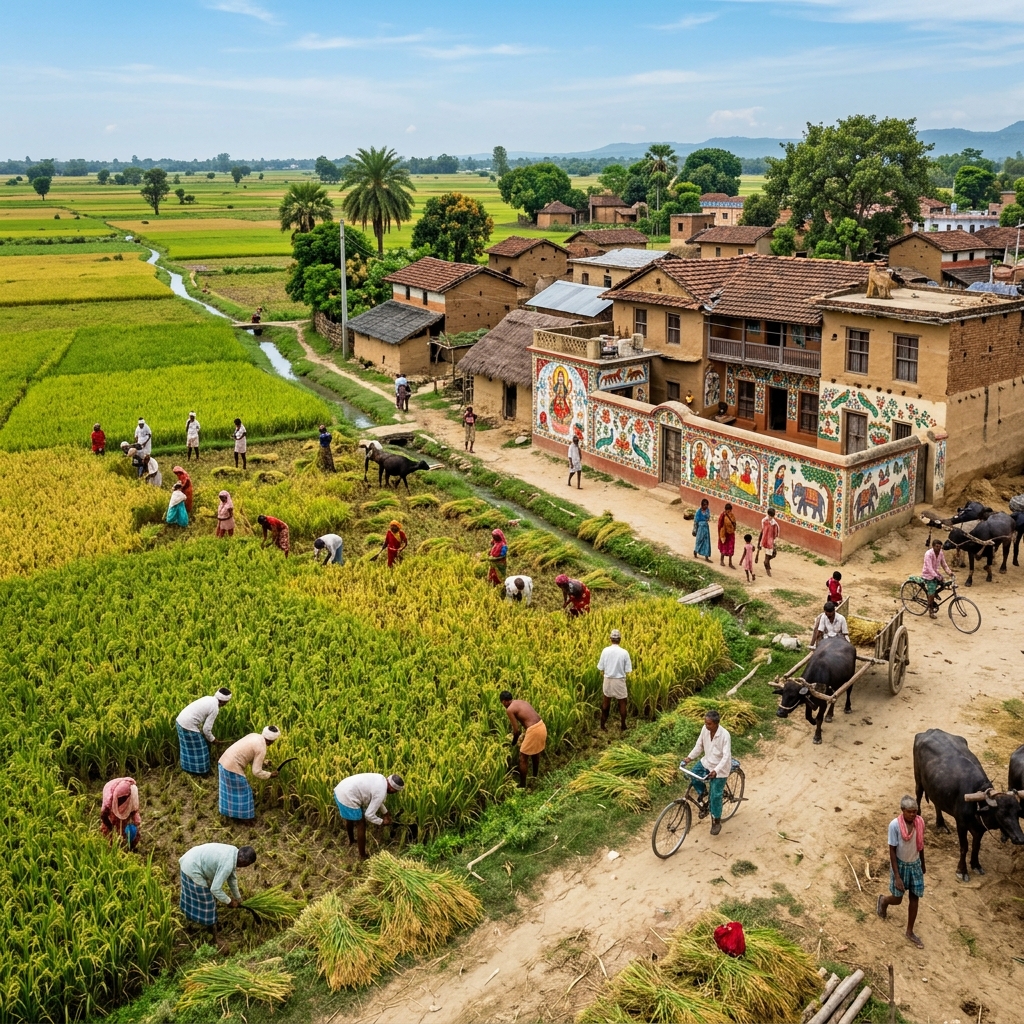
Our reds come from the rich clay of the region; our yellows from freshly ground turmeric; our blues from the indigo plant; and our deep blacks from the soot of oil lamps. This commitment to an organic palette ensures that each painting is a living part of the landscape.
The Four Stages of Creation
Surface Preparation
The canvas (paper or silk) is treated with a natural primer to ensure pigment longevity and a unique texture.
Kachni (Outlining)
The artist creates the entire composition using fine, continuous lines, often without any preliminary sketches.
Bharni (Filling)
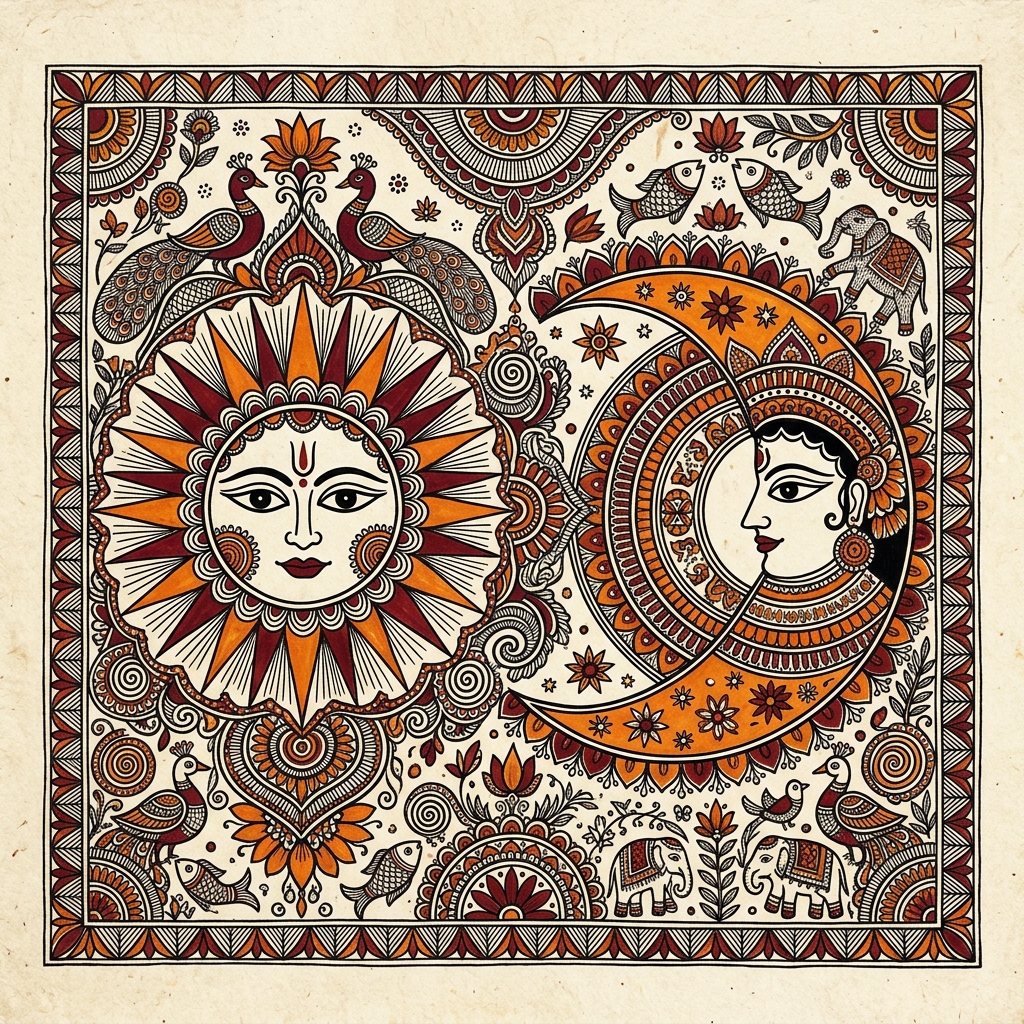
Vibrant, solid colours are applied to the outlined shapes, creating a bold and rhythmic visual contrast.
Micro-Patterning
The final stage involves adding intricate patterns—dots, parallel lines, and swirls—that fill every empty space (Gobar).
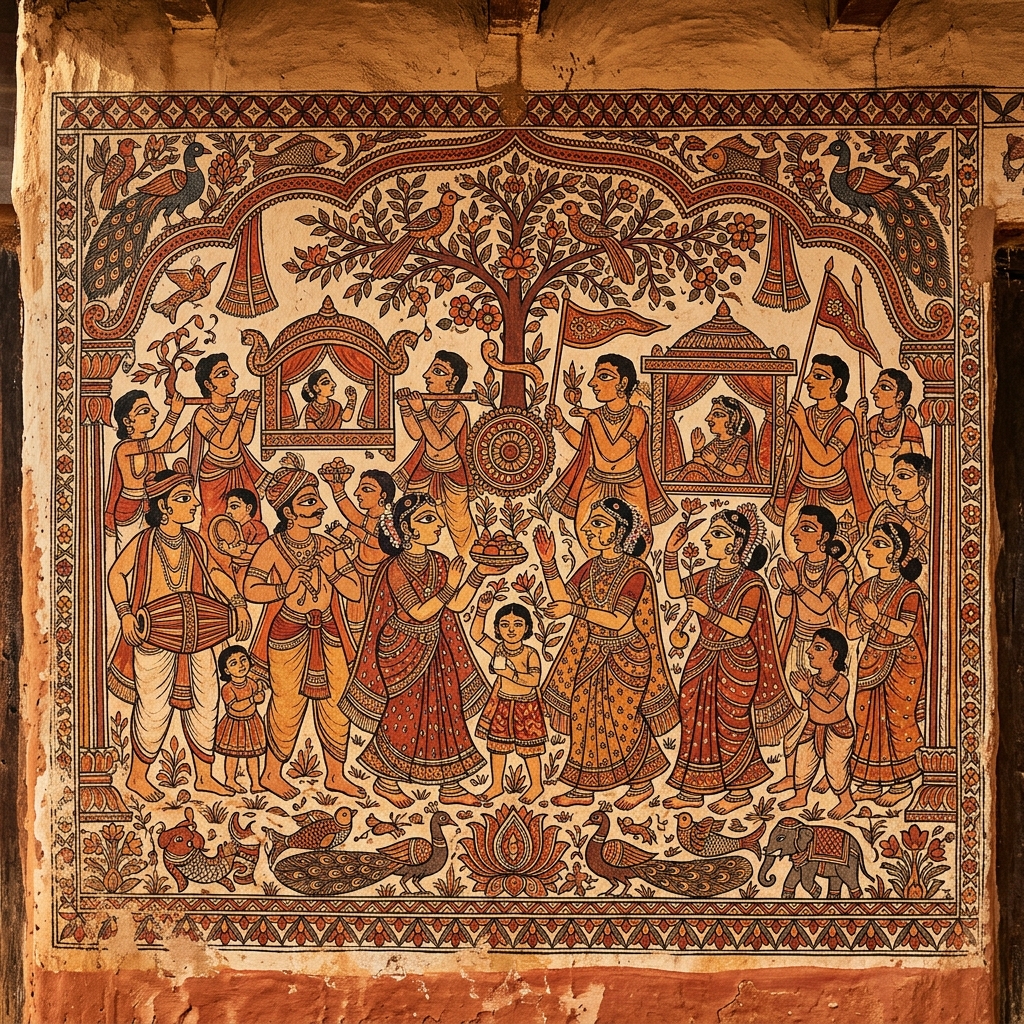
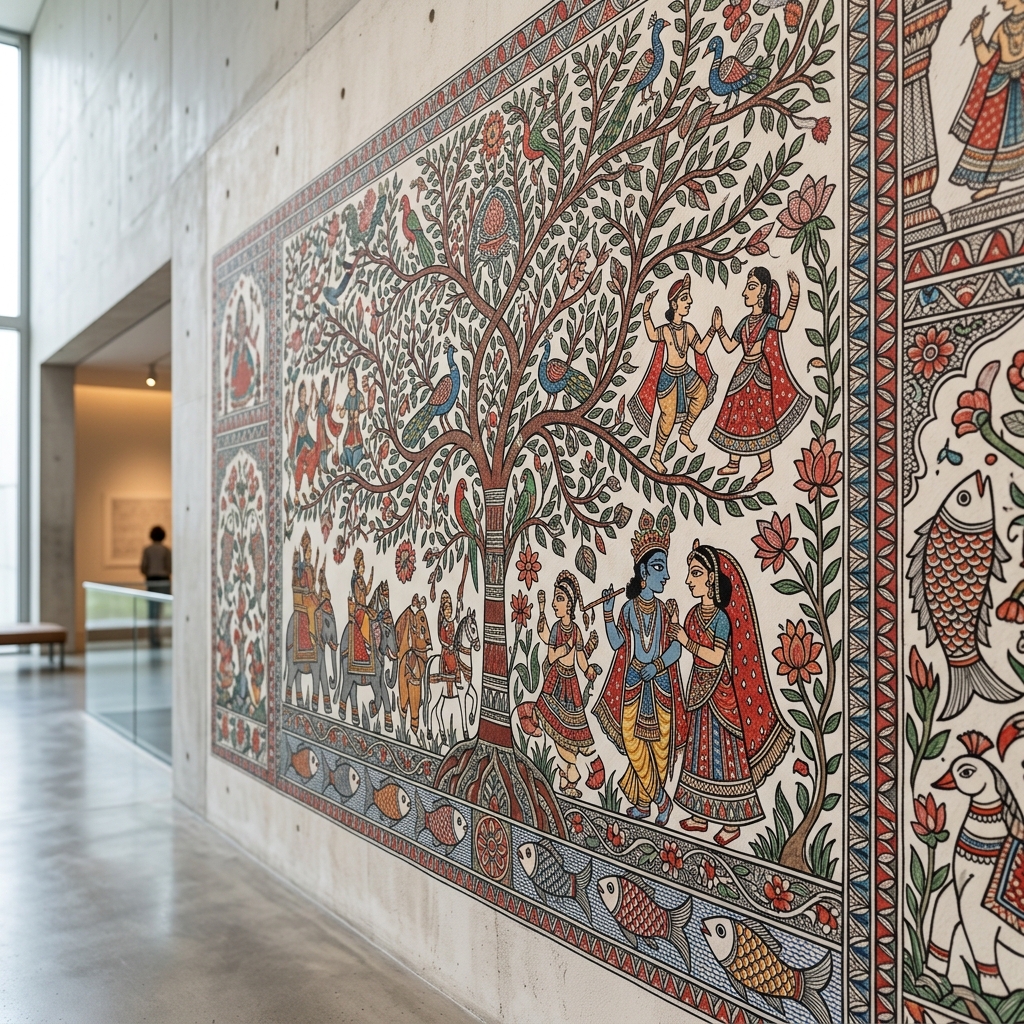
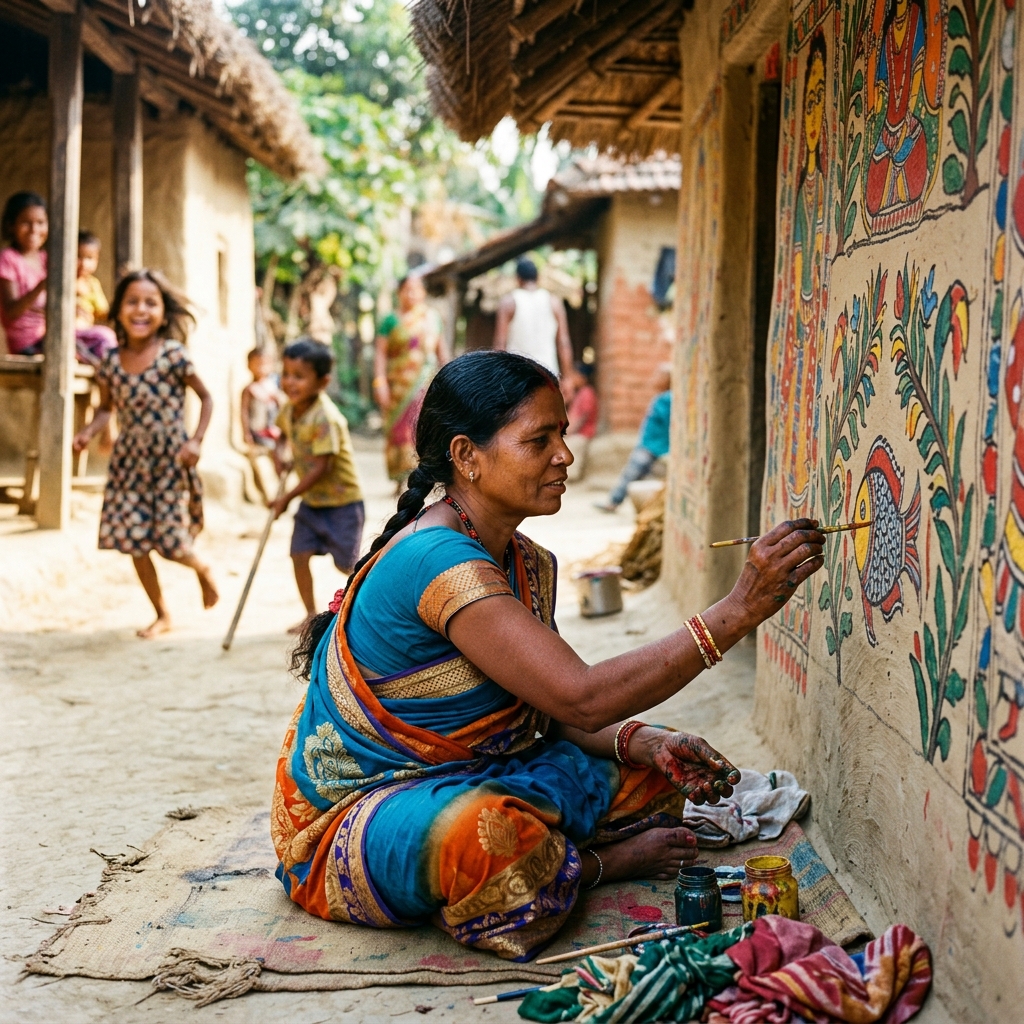
The Walls (Kohbar)
Historically, these techniques were used to decorate the walls of nuptial chambers, serving as a ritual prayer for fertility and protection.
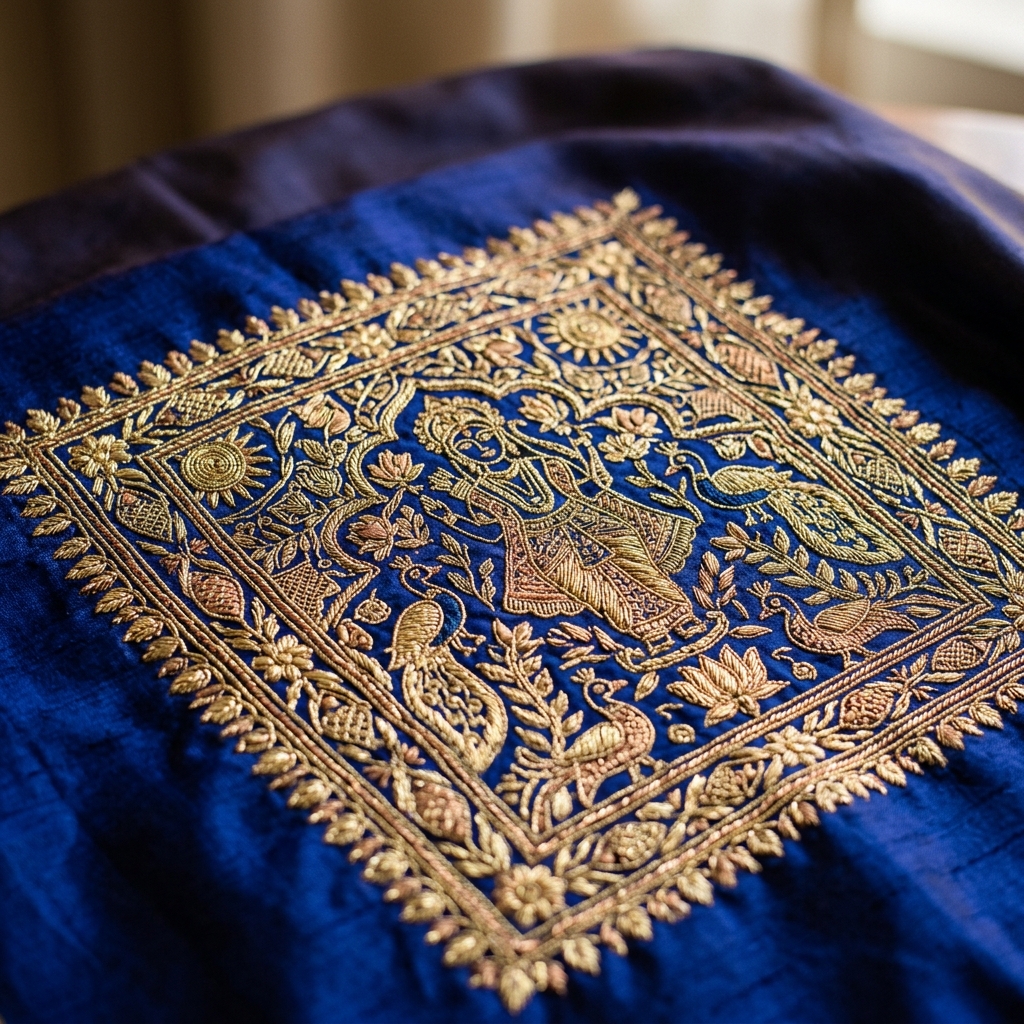
The Canvas (Contemporary)
Today, these same techniques are applied to paper, silk, and wood, allowing the ancient ritual to become a movable, global art form.